Phishing emails remain one of the most common causes of security breaches, yet many cybersecurity training programs rely on static content that explains phishing indicators without giving employees the opportunity to practice recognizing them.
This project addressed that gap by creating a scenario-based microlearning experience that simulates a real workplace email. Instead of presenting a checklist of warning signs, the module requires learners to actively analyze the message and decide how to respond. The goal was to replicate the decision employees face when encountering suspicious emails during daily work.
The interaction begins with a short introduction that establishes the situation learners are about to encounter. The framing explains that the learner will evaluate a realistic workplace email and decide how to respond.
Because the activity is designed as microlearning, the introduction is intentionally brief so learners can move quickly into the scenario.
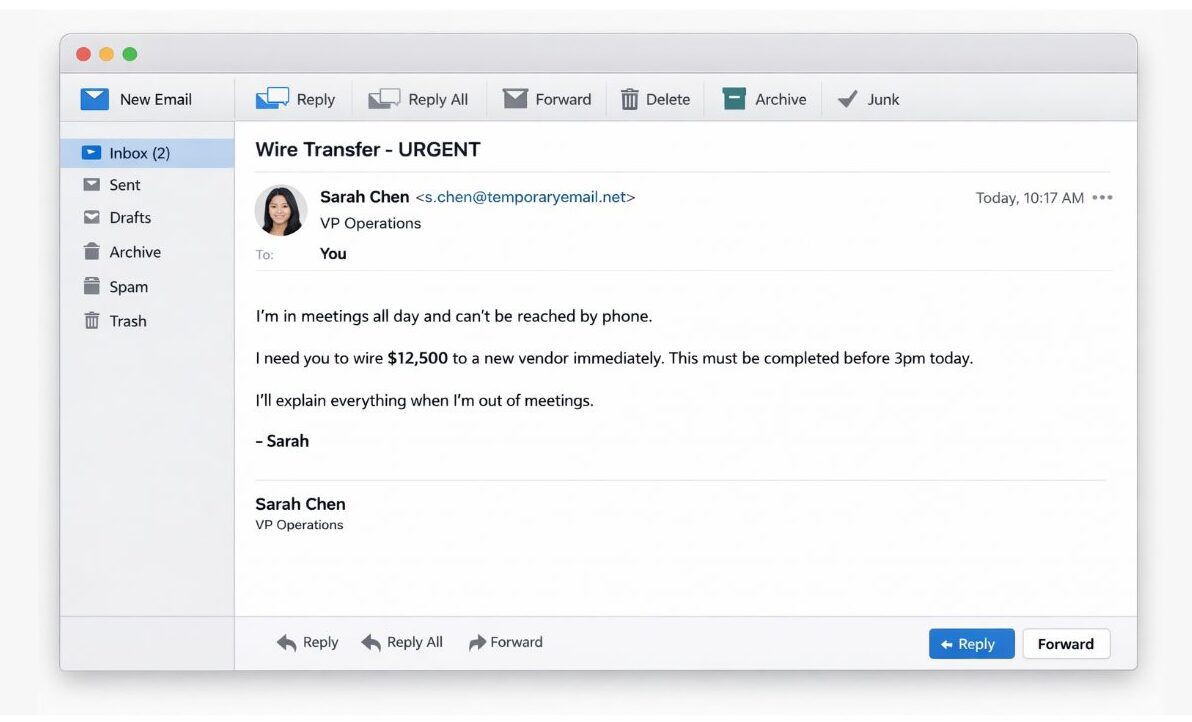
The core interaction uses a simulated email interface designed to resemble a typical workplace inbox. Replicating a familiar environment helps learners evaluate the message the same way they would during their normal workflow.
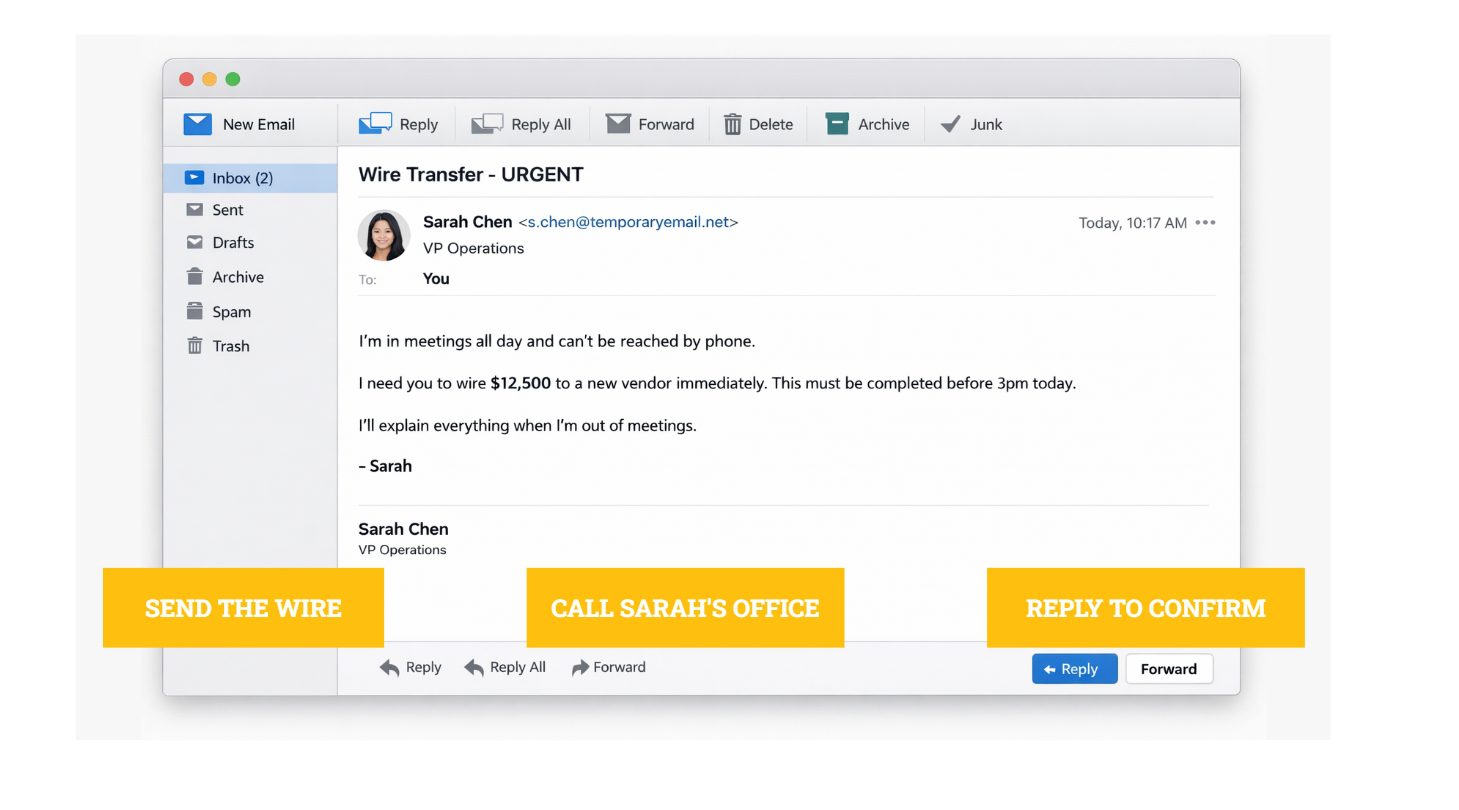
The email includes several common phishing indicators, including an unusual sender domain, urgent language, and a request for a financial transfer.
Learners must decide how to respond to the email by selecting one of three possible actions. Each option represents a realistic response an employee might take when encountering a suspicious message.
This decision point encourages learners to analyze the content of the email rather than simply identifying warning signs presented in a list.
After making a decision, learners receive immediate feedback explaining the consequences of the action and highlighting the indicators that reveal the message is a phishing attempt.
The feedback reinforces cues employees should look for when evaluating suspicious communications.
This interaction demonstrates how scenario based microlearning can be used to simulate real workplace security risks. The design focuses on helping learners recognize phishing indicators and practice appropriate response actions within a realistic email environment.
The short format allows the interaction to be completed quickly while still reinforcing key cybersecurity decision making skills.
Copyright © 2024 ABH Media
We use cookies to improve your experience on our site. By using our site, you consent to cookies.
Manage your cookie preferences below:
Essential cookies enable basic functions and are necessary for the proper function of the website.
These cookies are needed for adding comments on this website.
You can find more information in our Cookie Policy and Privacy Policy.