LEARNING & DEVELOPMENT

Four-Point Inspections: What Every Inspector Needs to Know

Four-Point Inspections: What Every Inspector Needs to Know

The Project

In Florida and select other states, a 4-point inspection is a legal requirement before a home can be insured. The inspection evaluates four systems: roofing, electrical, plumbing, and HVAC. The result gets submitted directly to the insurer and becomes the basis for coverage decisions.

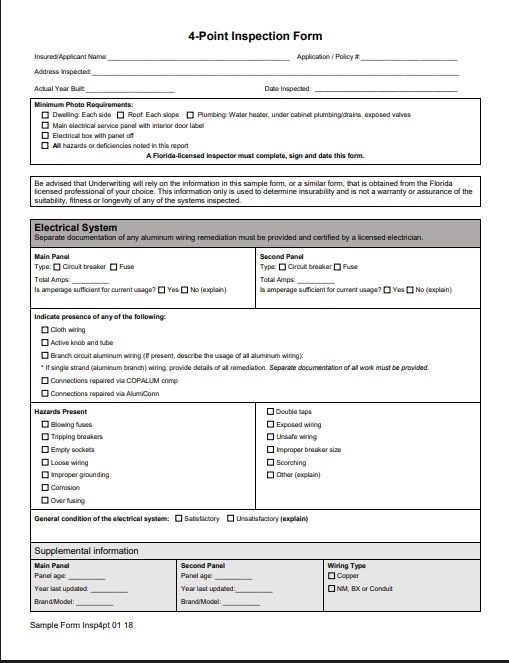
The gap wasn’t inspector effort or technical skill. It was documentation. Inspectors who misidentified a panel brand, failed to note polybutylene pipes, or incorrectly described wiring type were submitting reports that delayed or denied homeowner coverage. The form was the problem. Most inspectors had never been taught how to read it, complete it, or understand what underwriters were actually evaluating.

The business case didn’t require much persuasion. The course existed to close a knowledge gap with direct consequences for the homeowners inspectors serve.

Deliverables: eCourse, Workbook, Job Aids, Promotional video

Tools: Articulate Rise, Photoshop, Synthesia, Premiere Pro

Seat Time: 3 hours

Audience: Licensed home inspectors

The Process

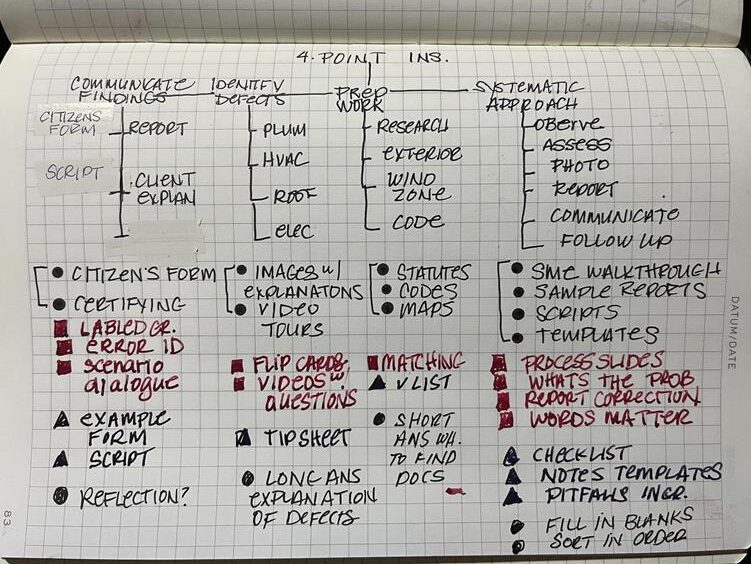
The handwritten content map was the first step before any content moved into Rise. It mapped the four systems against the types of learning each required: where visual identification was the problem, where documentation language was the gap, where liability boundaries needed to be drawn, and where a scenario would do more work than a lesson.

That distinction drove the interaction selection in the storyboard and kept the course from becoming eleven modules of text-heavy content delivery.

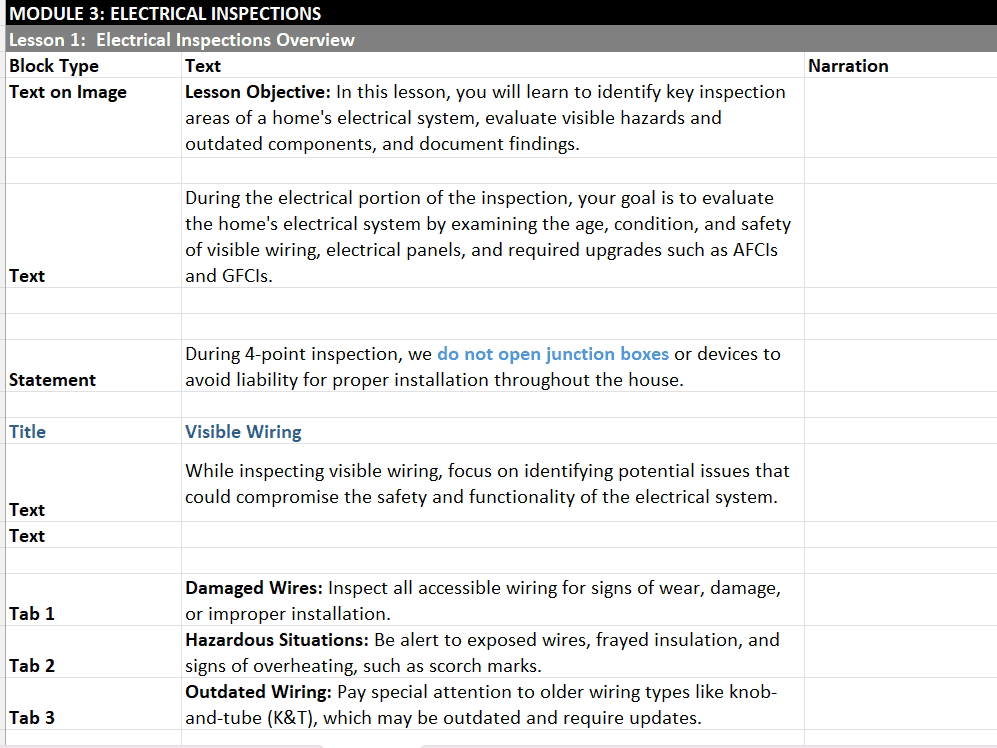
The course was storyboarded in Excel before any content moved into Rise, with each block tagged by interaction type. That step forced decisions about where a carousel was doing real work versus where it was just breaking up text, and where a scenario would land better than a knowledge check.

Building that structure first meant the Rise development was execution, not design on the fly.

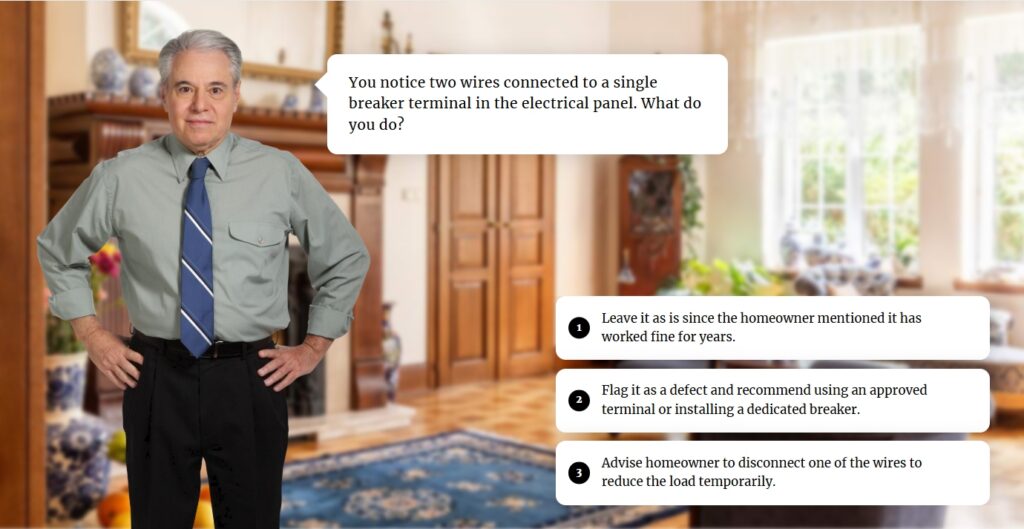
A knowledge check at the end of a compliance course confirms recall. It doesn’t tell you whether an inspector can apply what they learned when the findings are mixed, the stakes are real, and the homeowner is standing in the driveway. 

The scenario was designed to create that pressure in a low-stakes environment. Learners had to make judgment calls, not just select correct answers. The goal was transfer to the inspection itself, not performance on the course.

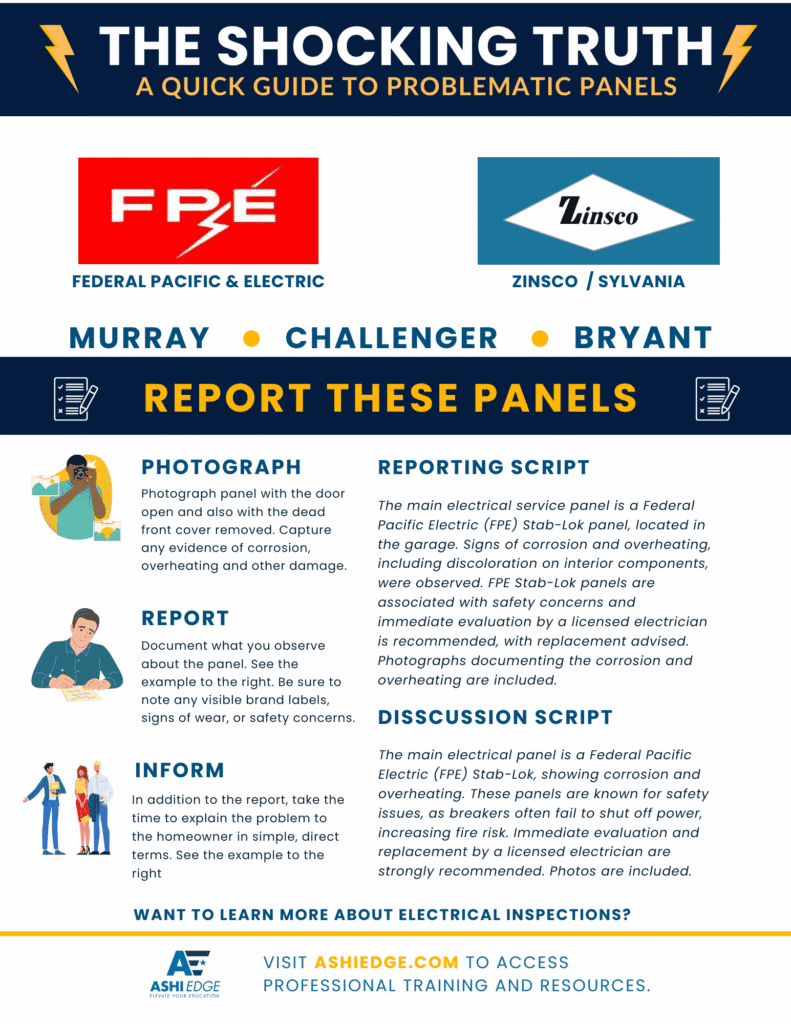
The Citizens Insurance form was embedded as a reference document accessible throughout the course and downloadable for field use. The “Shocking Truth” panel identification guide was designed as a standalone one-page reference with reporting and client discussion scripts, built to live in an inspector’s truck, not just their LMS history. Tipsheets and sample reports were included as tools rather than course artifacts. The measure of success was adoption beyond the completion screen.


The workbook was designed to mirror the eLearning module for module, not function as optional take-home material. Each section restates the learning objectives, provides key terms as a working reference, and closes with scenario activities that require written responses. 

The design logic was straightforward: inspectors who complete a 4-point inspection produce a document that determines whether a homeowner can get insurance. Practicing written observation and documentation language in a low-stakes workbook before doing it in the field was not incidental to the course design. It was central to it.

The Results

The course launched as a member benefit on ASHI Edge and was open to licensed inspectors across all states, with Florida representing the primary compliance audience. Enrollment was voluntary. Post-course survey data was collected from a representative sample of completers.

The enroll-to-complete gap (63% vs. 78%) reflects voluntary enrollment behavior: learners who began the course with intent completed at a strong rate. The delta represents self-selection at the point of enrollment, not content attrition.

78%

Start-to-Complete Rate

63%

Enroll-to-Complete Rate

89%

Rated Excellent or Good

79%

Found Content Genuinely Valuable

Your people need to learn things.

I can help.

Copyright © 2024 ABH Media